Buenos Aires, Argentina. Last May 24th Hilton Puerto Madero hosted Microsoft Build 2022, one of the key events in the technology industry. Microsoft Build this year was an in-person and virtual experience at the same time, with different host countries around the world, such as Germany, Argentina, France, Japan and the United Kingdom. Throughout the day, Microsoft MVPs, professionals, partners and customers from around the world share the latest innovations and digital solutions for the years to come.
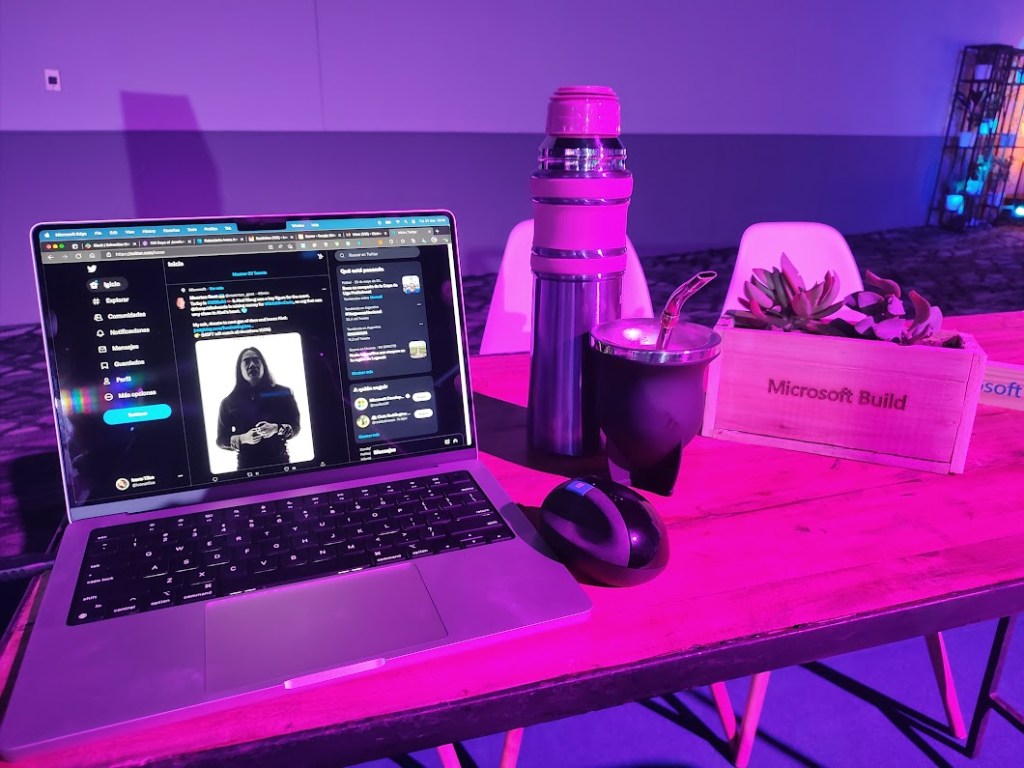
As a professional awarded by Microsoft, I had the opportunity to be invited to be part of the event as an expert in Artificial Intelligence and Mixed Reality.

We had the opportunity to share with the audience some of the work that 3XM Group has been doing with technologies such as Mixed Reality, Augmented Reality and Extended Reality.

Also share conversations with key professionals from the world of technology.
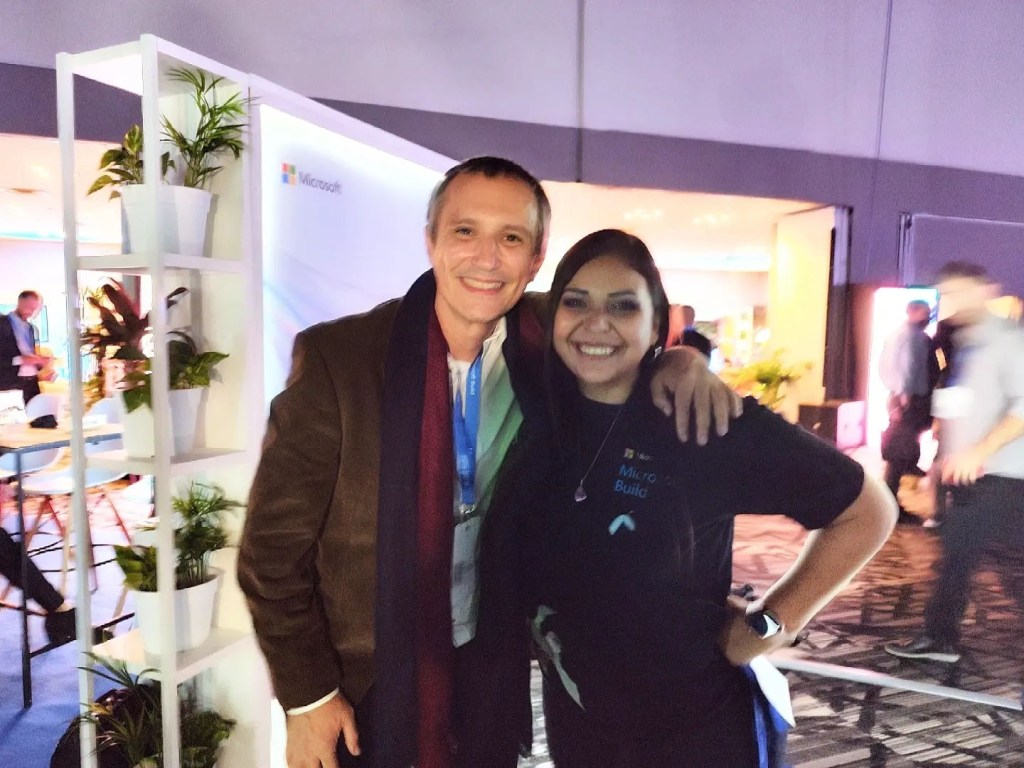
“We are aiming for anyone to be able to develop apps. This has to do with low code”, said Ezequiel Glinsky, CTO and General Manager of Customer Success for Microsoft Latin America.
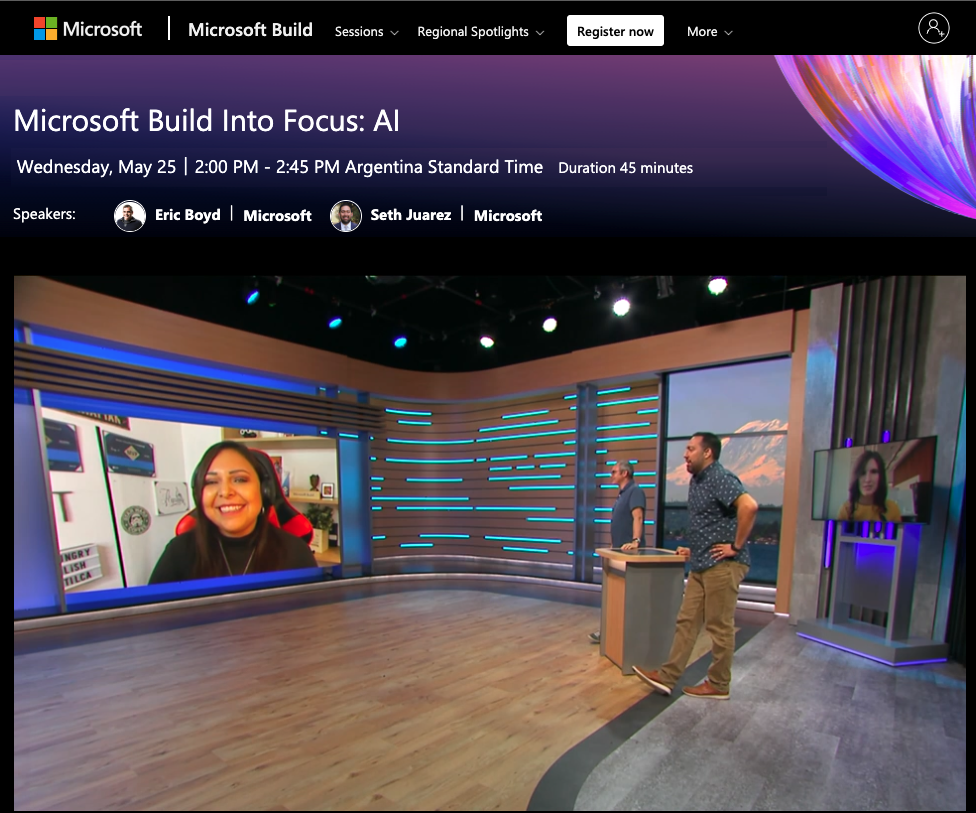
Microsoft Build also had an online presence, in which I had the opportunity to share stage with Seth Juarez, Principal Program Manager of Platform AI at Microsoft, and Eric Boyd, CVP of Platform AI at Microsoft
Two days of many announcements among which stand out:
- GitHub Copilot general availability: GitHub Copilot is an AI programmer that provides full code-based programming suggestions and feedback. A technical preview of the product was first introduced last year, and now more is coming.
- Azure OpenAI Service: An Azure Cognitive Service, is now available in preview. Approved customers can access different models from OpenAI, including the GPT-3 base series (Ada, Babbage, Curie and DaVinci), Codex series and embedding models, with the enterprise capabilities of Azure. Azure OpenAI Service helps customers enable new reasoning and comprehension capabilities for building cutting-edge apps for use cases such as writing assistance, code generation and making sense of unstructured data. With features like fine-tuning and built-in responsible AI, customers can also tailor the model to their specific needs to detect and mitigate harmful use
- Azure Container Apps, now generally available, enables customers to run microservices and containerized apps on a serverless platform. Azure Container Apps is built on the foundation of powerful open-source technology in the Kubernetes ecosystem.
- Azure Communication Services Mobile UI Library, now generally available, helps save time and reduce complexity for app developers by providing production-ready UI components for mobile apps. The release includes support for 13 languages, accessibility for UI components and the ability to view shared screen content – including pinch-to-zoom, a key feature for mobile users.
- Azure Spring Cloud, is now Azure Spring Apps, a fully managed service from Microsoft and VMware, solves the challenges of running Spring apps at cloud scale by removing the need to worry about infrastructure, app lifecycle, monitoring, container intricacies and Kubernetes. Service Bus Explorer capabilities are now generally available in the Azure portal. Developers can now use the portal to specify a Service Bus namespace and then send messages to a queue or topic in that namespace, as well as receive or peek at messages from a queue or a subscription.
- SQL Server 2022 integrates with Azure Synapse Link and Microsoft Purview to enable customers to derive deeper insights, predictions and governance from their data at scale. Cloud integration is enhanced with disaster recovery (DR) to Azure SQL Managed Instance, along with no-ETL (extract, transform and load) connections to cloud analytics, which allow database administrators to manage their data estates with greater flexibility and minimal impact to the user.
- NGINX for Azure, in preview, is a natively integrated software as a service (SaaS) solution with advanced traffic management and monitoring. The tight Azure integration enables ease of use with a few clicks for provisioning and configuration though the Azure portal. Developers can leverage advanced traffic management features, such as JSON Web Token (JWT) authentication and active health checks, with built-in security integrations like Azure Key Vault for SSL/TLS certificate management.
- Dynatrace for Azure is a natively integrated software as a service (SaaS) solution that will provide deep cloud observability for proactive identification and resolution of issues impacting mission critical apps.
- Microsoft Dev Box will give developers self-service access to high performance, cloud-based workstations that are pre-configured and ready-to-code for specific projects. Azure Deployment Environments will make it easy for developer teams to quickly spin up app infrastructure with project-based templates that establish consistency and best practices.
- Enhancements to the developer experience on Azure Kubernetes Service
- Draft Azure CLI, Azure portal and Visual Studio Code extensions.
- Web application routing add-in, which provides developers immediate access to expose their web apps deployed on Kubernetes to the internet.
- An add-in to the Kubernetes-based Event Driven Autoscaler (KEDA). Customers can drive the scaling of any container in Kubernetes based on the number of events that need to be processed.

Finally, part of the Metaverse strategy was also presented.
“Microsoft Is Currently Selling Metaverse and Making Robots With Kawasaki” – Tech Times https://t.co/bi9FJ76p4g
An announcement was made on Tuesday, May 24, that the American multinational company will innovate an “industrial metaverse” for the company’s new customer, Kawasaki. The automobile company’s workers will now wear HoloLens headset, which will help improve operations and make it easier in the production and managing supply chain.

 Ivana Tilca
Leave a Reply